Case Study: Extending Cap Mold Service Life Through Structured Maintenance Protocols
Case Study: Extending Cap Mold Service Life Through Structured Maintenance Protocols
In high-speed, continuous closure manufacturing, high-cavity bottle cap molds operate under intense mechanical stresses, high clamping forces, and continuous thermal cycling. Running at cycle times under 4.5 seconds, a single 48-cavity or 96-cavity tool executes tens of millions of impressions annually. Without a rigorous, scientifically grounded maintenance regimen, premature component wear, thread micro-fretting, cooling channel scaling, and flash formation can prematurely destroy expensive tooling and result in catastrophic downtime.
As a specialized Chinese bottle cap mold manufacturer and turnkey closure tooling expert, cap-molds engineered a comprehensive, data-driven preventive maintenance protocol for a global beverage packaging producer. This case study illustrates how implementing structured maintenance schedules and precision refurbishment procedures extended mold service life by over 40%, keeping high-cavity tooling running smoothly past the 10-million-cycle threshold.
1. The Challenge: Cumulative Wear in High-Cavity Closure Tooling
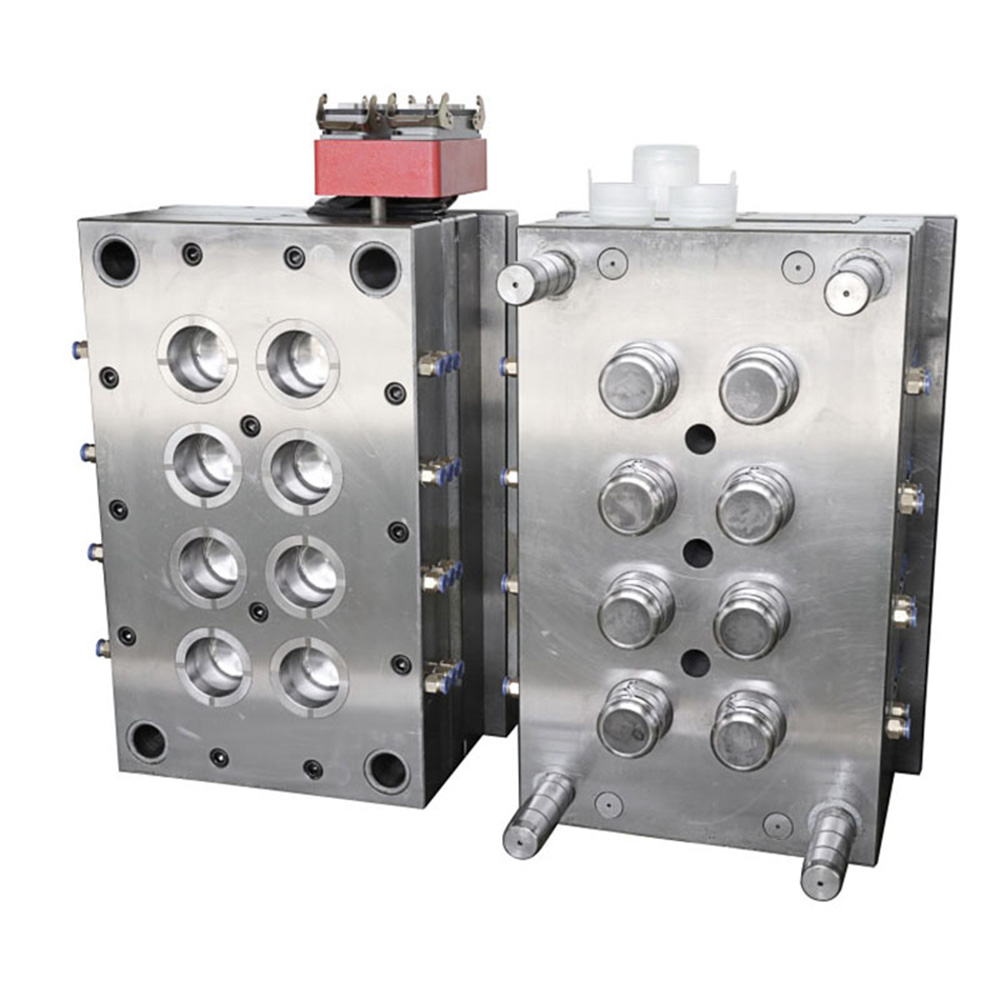
The client operated a fleet of 64-cavity water cap molds running HDPE and PP resins. After reaching approximately 5 million cycles, the tooling began exhibiting incremental quality degradation and elevated operational costs, including:
- Thread Profile Fretting & Flash: Repeated mechanical unscrewing and stripping actions caused micro-abrasion on the core thread inserts, resulting in cap thread flash and dimensional variance.
- Cooling Channel Scaling & Thermal Drift: Calcium deposits and bio-fouling inside narrow core cooling circuits reduced thermal conductivity by 22%, forcing cycle time extensions to prevent cap deformation.
- Parting Line Wear & Vent Clogging: Off-gassing from polymer additives clogged micro-vents (0.015 mm depth), triggering short shots and burning at the closure rim.
- Hot Runner Tip Degradation: Thermal fatigue and abrasive color concentrates degraded valve-gate tips, creating irregular gate vestiges on closure tops.
2. Technical Intervention: The cap-molds Maintenance Framework
To reverse performance decline and establish predictable tooling longevity, cap-molds integrated a structured, multi-tier maintenance architecture based on total productive maintenance (TPM) principles.
A. Tiered Preventive Maintenance Protocols (Level 1 to Level 3)
We established clear operational intervals to prevent minor wear from accelerating into structural failure:
- Daily / Shift-Level (Level 1 - In-Machine): Automated optical inspection of parting lines, residue cleaning via specialized solvent, and non-migrating food-grade lubrication on slide guides.
- Intermediate (Level 2 - Every 500,000 Cycles): Bench inspection, removal and ultrasonic cleaning of core pins, vent gap depth verification, and thermal imaging checks on manifold heaters.
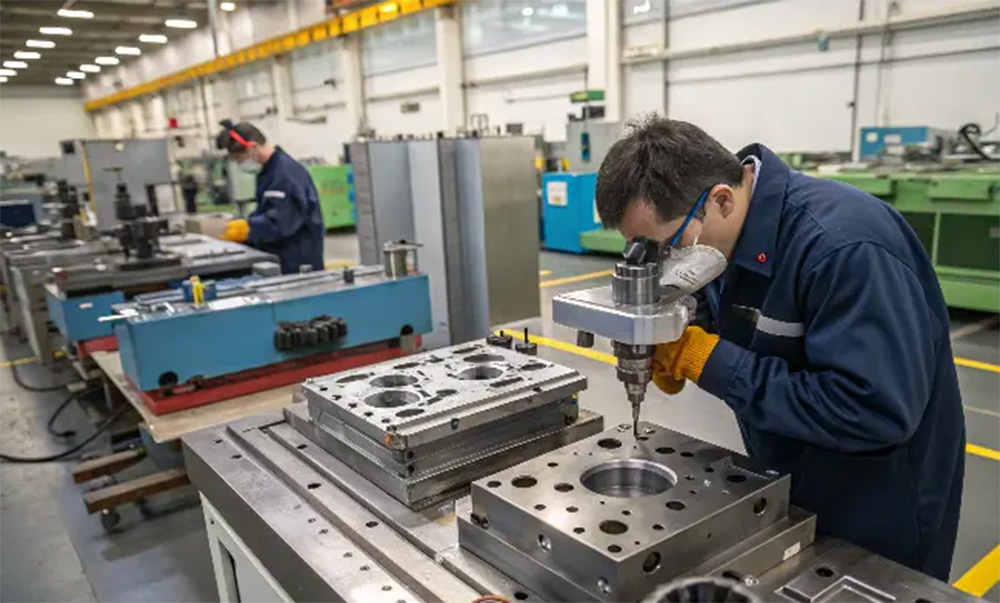
- Major Overhaul (Level 3 - Every 3,000,000 Cycles): Full mold teardown, 3D Coordinate Measuring Machine (CMM) dimensional audit, ultrasonic descaling of internal water circuits, and surface hardness testing.
B. Ultrasonic Descaling & Micro-Vent Restructuring
To restore peak cooling efficiency, internal water channels underwent chemical descaling and high-frequency ultrasonic flushing, restoring fluid velocity and heat transfer capacity to original factory specs. Blocked perimeter vents were re-machined using high-precision picosecond laser ablation to restore exact 0.015 mm venting profiles.
C. Surface Re-Coating & Precision Insert Swapping
High-wear core thread components were re-treated with Physical Vapor Deposition (PVD) titanium nitride (TiN) hard coatings (HRC > 65). Rather than replacing entire cavity blocks, cap-molds' modular insert design allowed localized swapping of worn core tips within micron-level tolerances (± 0.005 mm).
3. Results & Extended Tooling Lifecycle Metrics
Following the adoption of the cap-molds structured maintenance framework, the client's 64-cavity cap molds achieved remarkable performance improvements across all operational parameters.
| Performance Benchmark | Unstructured Maintenance (Baseline) | cap-molds Structured Protocol | Impact / Savings |
|---|---|---|---|
| Total Mold Service Life | ~ 6.0 Million Cycles | 10.5+ Million Cycles | +75% Life Extension |
| Unscheduled Downtime / Year | 185 Hours | 28 Hours | 84.8% Reduction in Downtime |
| Cooling Efficiency (Delta T) | Degraded by 22% | Maintained at 100% Factory Spec | Consistent Cycle Time (3.8s) |
| Cap Reject Rate (Flash/Shorts) | 1.45% | < 0.08% | Substantial Material Savings |
| Total Cost of Ownership (TCO) | High (Frequent core replacement) | 32% Lower Maintenance TCO | Optimized Spare Part Usage |
4. Conclusion: Expert Tooling Partner for Global Closure Producers
A high-cavity bottle cap mold is a long-term capital investment. Extending mold service life beyond 10 million cycles requires a combination of high-grade mold steel selection, precision manufacturing, and disciplined maintenance protocols.
As a trusted Chinese manufacturer of high-precision bottle cap molds, cap-molds provides not only advanced hot runner closure tooling, but also comprehensive maintenance guidelines, standardized spare part programs, and technical field support to maximize return on investment for beverage packaging leaders worldwide.