Case Study: Running 30% PCR Content Without Seal Lip Quality Degradation
As global sustainability mandates shift toward circular economies, beverage brand owners and packaging converters are under mounting pressure to integrate Post-Consumer Recycled (PCR) resins into single-use closures. However, processing 30% rHDPE (recycled High-Density Polyethylene) or rPP in high-cavity bottle cap molds presents major technical hurdles: unpredictable Melt Flow Rate (MFR) fluctuations, batch-to-batch contamination, micro-voids, and severe degradation of the functional sealing lip.
In this technical case study, cap-molds demonstrates how optimized core cooling, specialized gate geometry, and tailored cavity venting allow high-volume caps to incorporate 30% PCR content while maintaining strict 100% leak-proof seal lip integrity and zero loss in cycle time.
1. The Engineering Challenge: PCR Rheology & Seal Lip Vulnerability
The primary functional component of any beverage closure is its internal seal lip (bore seal or plug seal). The seal lip requires extremely fine dimensional tolerances (± 0.02 mm) to maintain pressure retention against carbonated soft drinks (CSD) or hot-fill beverages. Introducing 30% PCR content creates three critical processing defects:
- MFR Instability & Viscosity Variations: Recycled resin blends often suffer from erratic shear rates, causing uneven packing in the thin, flexible seal lip geometry.
- Thermal Degradation & Flashing: Contaminants and lower-molecular-weight polymers in PCR lower the thermal stability window, leading to flash at the parted core areas or incomplete filling (short shots) at the seal lip tip.
- Increased Warpage & Shrinkage Variance: Variable crystallization rates in PCR lead to out-of-round closures and inner seal ring collapse upon ejection.
2. Technical Intervention Strategy by cap-molds
To overcome these material limitations, cap-molds implemented a comprehensive mold re-engineering framework targeting core thermal control, hot runner balancing, and micro-venting:
A. Conformal Core Cooling & High-Thermal Conductivity Alloys
Standard core pin cooling channels often struggle to extract heat uniformly from the delicate inner seal lip zone. cap-molds engineered copper-alloy core inserts paired with high-efficiency 3D-printed conformal cooling channels. This reduced local temperature spikes around the seal ring by 18°C, ensuring rapid, uniform solidification of the PCR material without internal stress concentration.
B. Customized Hot Runner Tip & Rheological Balance
To accommodate MFR fluctuations in the 30% PCR blend, the hot runner system was redesigned with custom valve-gate tip geometries. Enlarged shear-controlled gate openings reduced frictional heating during injection, preventing thermal chain-scission of the recycled polymer chains while maintaining a clean, vestige-free gate.
C. Advanced Multi-Stage Micro-Venting
Entrapped gas from residual PCR volatile organic compounds (VOCs) frequently causes burning or void formation at the tip of the seal lip. cap-molds integrated self-cleaning perimeter micro-vents (0.015 mm depth) around the seal lip formation area, allowing trapped gases to purge rapidly without causing resin flash.
3. Case Study Results & Performance Metrics
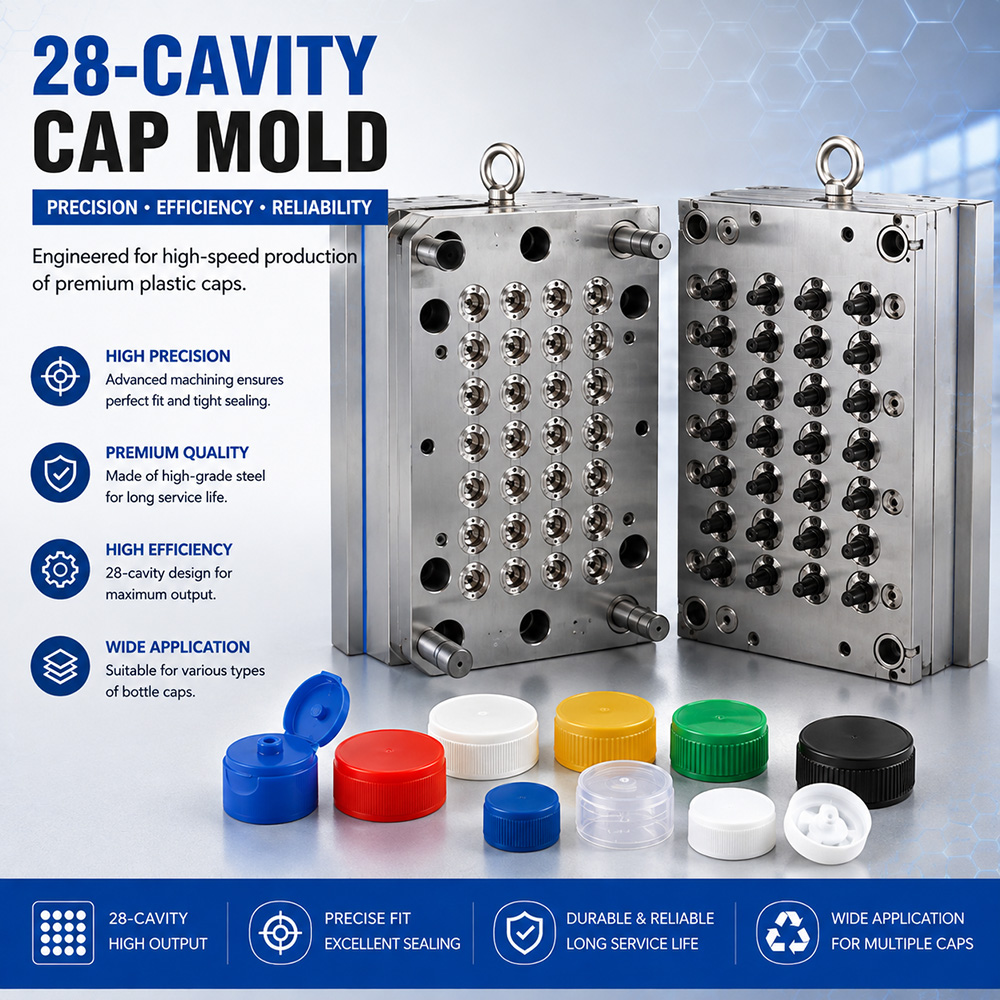
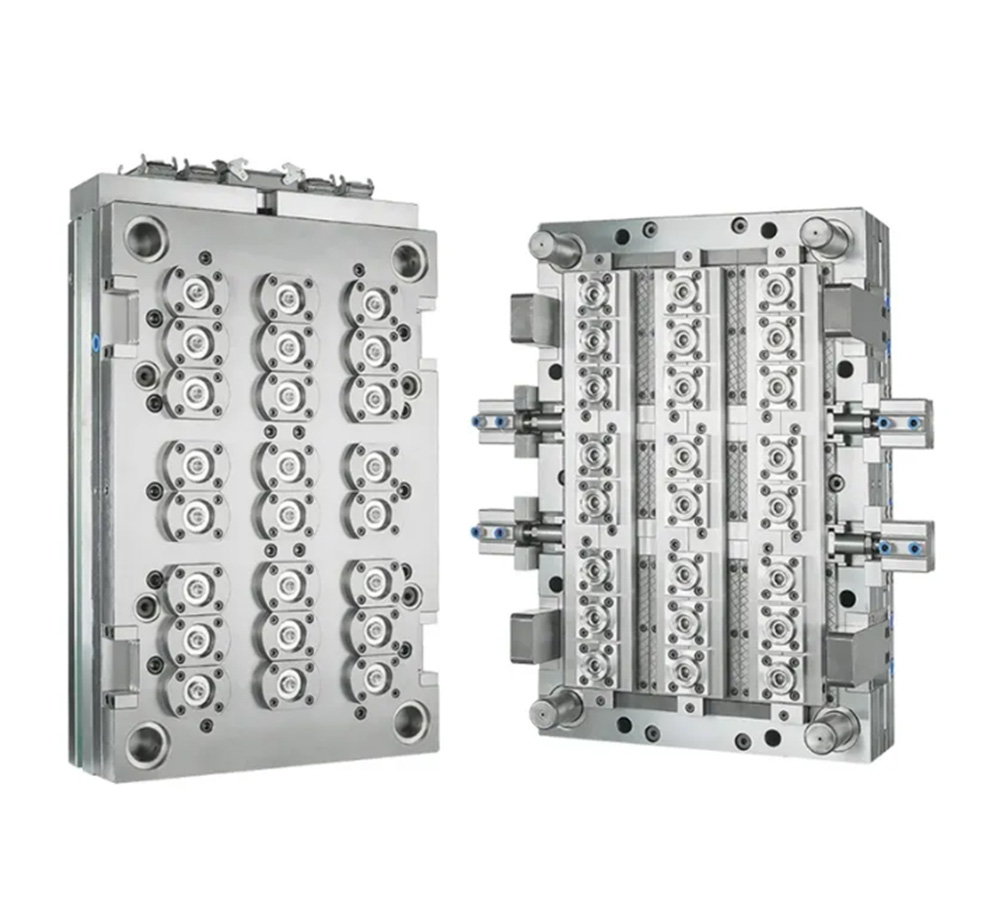
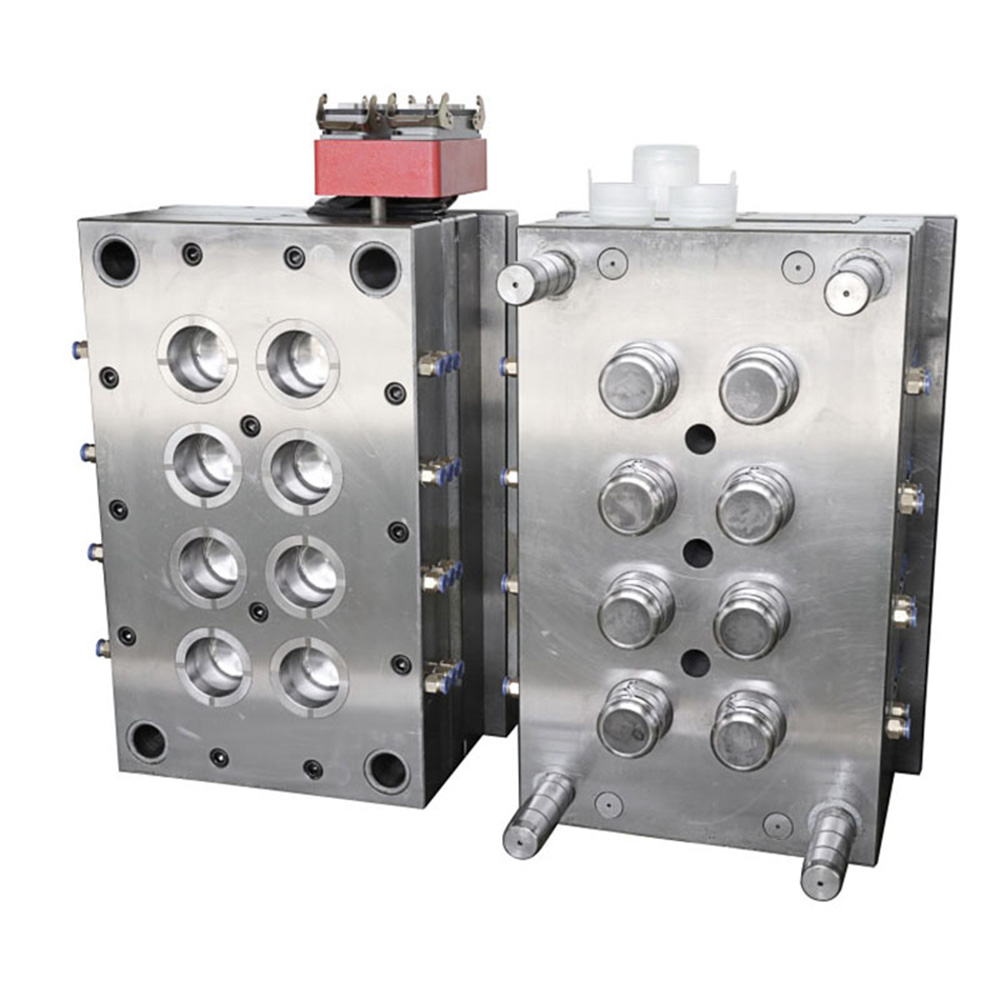
The modified 48-cavity cap mold was benchmarked on a high-speed hybrid injection molding machine under continuous production conditions comparing 100% Virgin HDPE against a 70% Virgin / 30% rHDPE blend.
| Key Performance Indicator (KPI) | 100% Virgin HDPE (Baseline) | 30% PCR Blend (cap-molds Solution) |
|---|---|---|
| Cycle Time | 4.2 seconds | 4.3 seconds (Negligible impact) |
| Seal Lip Ovality / Tolerance | ± 0.018 mm | ± 0.021 mm (Well within Spec) |
| Continuous CO2 Retention Test (3.7 bar) | 100% Pass (28 Days) | 100% Pass (28 Days) |
| Cap Weight Consistency | ± 0.03 g | ± 0.04 g |
| Mold Maintenance Interval | 3.0 Million Cycles | 2.5 Million Cycles (Gas clean) |
4. Conclusion & Sustainable Cap Tooling Expertise
Integrating recycled resins into precision closures does not require sacrificing quality or lowering output rates. By addressing polymer rheology, thermal management, and venting at the mold design stage, cap-molds enables global packaging manufacturers to achieve aggressive sustainability targets without compromising closure sealing performance.
As an expert Chinese bottle cap mold manufacturer, cap-molds continues to lead the industry in sustainable tooling solutions, lightweight cap engineering, and high-cavity hot runner optimization for CSD, water, and dairy applications.