The Impact of Mold Steel Selection on Cap Quality and Tool Life
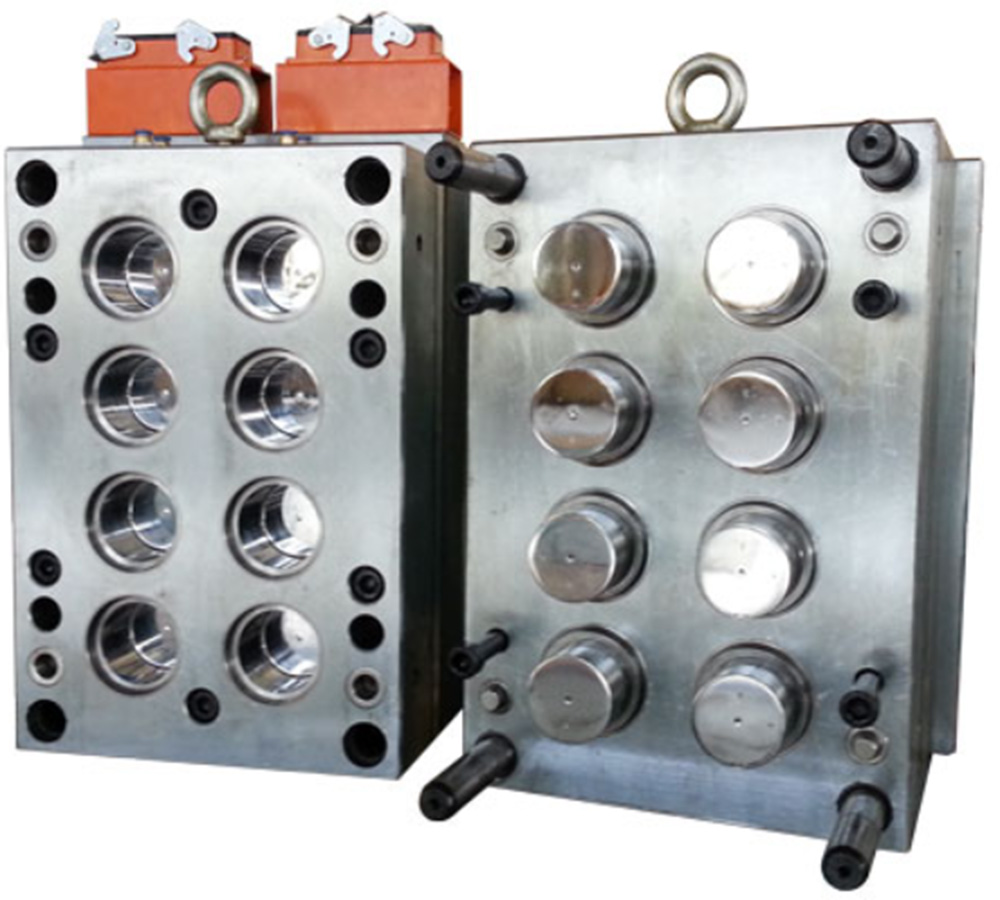
In bottle cap molding, the mold is the most critical asset. Its cost is substantial, its lead time is significant, and its performance directly determines cap quality and production efficiency. Yet many manufacturers treat mold steel as a commodity, selecting the same material for every application.
This is a mistake.
Different cap applications impose vastly different demands on mold steel. A high-volume water bottle cap mold running millions of cycles requires different properties than a short-run pharmaceutical cap mold. A cap with aggressive texture requires different wear resistance than a polished cosmetic cap. A mold that runs filled materials requires different corrosion resistance than one running natural polypropylene.
At Shuanghao, we treat steel selection as a precision engineering decision. This article reveals how mold steel choice affects cap quality and tool life, and how to select the optimal steel for your application.
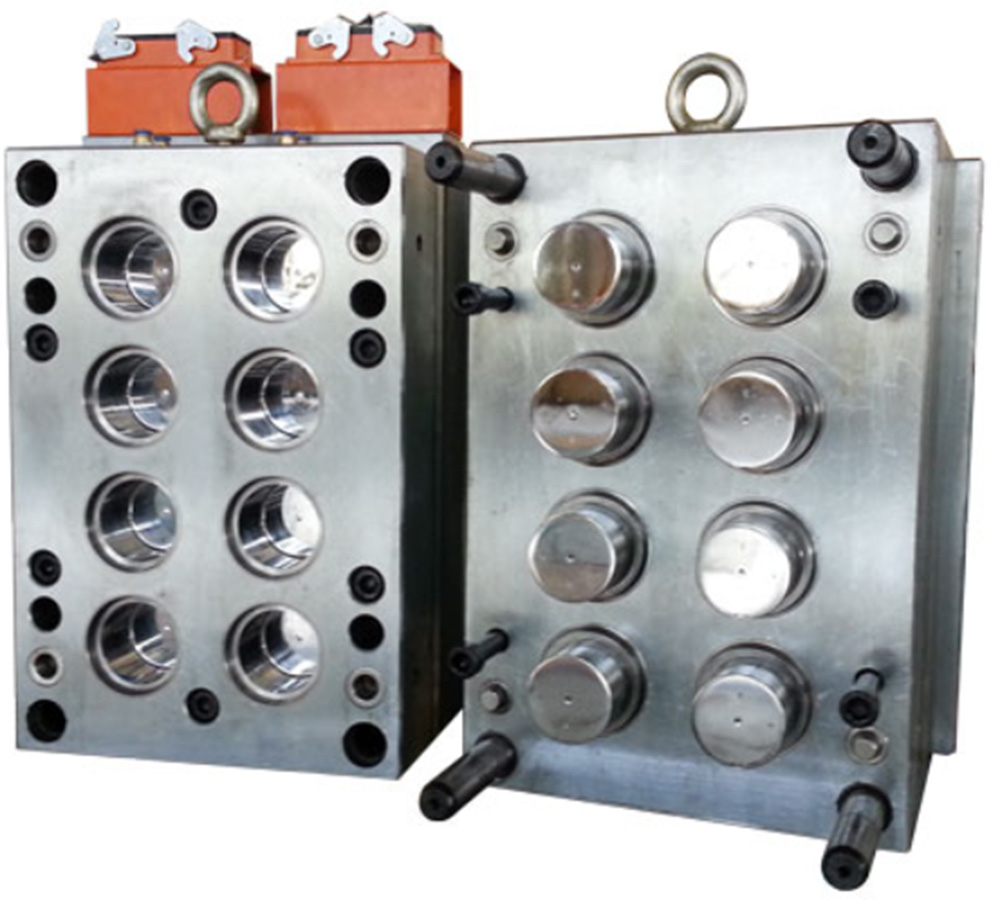
Why Steel Selection Matters
Mold steel affects every aspect of mold performance and cap quality.
Dimensional Stability
Steel that moves or distorts during heat treatment creates cavities that are not true to design. Steel that deflects under injection pressure creates flash and dimensional variation. Steel that retains its geometry over millions of cycles maintains consistent cap dimensions.
The result of poor dimensional stability is inconsistent cap quality, cavity-to-cavity variation, and premature mold retirement.
Wear Resistance
Every cycle, plastic flows across cavity surfaces at high pressure and velocity. Mineral fillers and glass fibers act as abrasives. Color pigments can be abrasive. Ejector pins slide against steel surfaces.
The result of poor wear resistance is gradual cavity dimensional change, roughened surface finishes, increased flash and parting line damage, and reduced mold life.
Corrosion Resistance
Cooling water contains minerals and chemicals. Some plastics release corrosive gases. Residues can corrode if molds are stored improperly.
The result of poor corrosion resistance is pitting on cavity surfaces, roughened finishes affecting cap appearance and release, gate damage affecting fill quality, and mold failure requiring expensive repair or replacement.
Thermal Conductivity
Steel thermal conductivity affects cooling speed and uniformity. Higher conductivity allows faster cycle times. Uniform conductivity ensures even cooling and prevents warpage.
The result of poor thermal conductivity is longer cycle times reducing output, uneven cooling causing warpage, and hot spots creating sink marks or burn marks.
Polishability
Cavity surfaces must achieve specified finishes. High-gloss applications require mirror finishes. Matte finishes require uniform texture.
The result of poor polishability is inability to achieve required surface finish, increased finishing time and cost, and inconsistent cavity-to-cavity finish.
Common Mold Steels for Cap Molds
Shuanghao works with a range of mold steels selected for specific applications.
H13 Tool Steel
H13 is a chromium hot-work tool steel widely used for injection molds. Hardness ranges from 46 to 52 HRC. Wear resistance is excellent. Thermal conductivity is moderate. Corrosion resistance is moderate.
H13 is suitable for high-volume cap molds where wear resistance is critical. It is ideal for glass-filled or mineral-filled materials. It performs well at elevated mold temperatures. It offers good toughness for complex cavity details.
Shuanghao recommends H13 for high-volume beverage caps, caps with abrasive fillers, and applications requiring maximum tool life.
S136 Stainless Steel
S136 is a martensitic stainless steel with excellent corrosion resistance. Hardness ranges from 48 to 52 HRC. Wear resistance is very good. Corrosion resistance is excellent. Polishability is superior.
S136 is suitable for pharmaceutical and medical caps where corrosion resistance is essential. It is ideal for food contact applications. It performs well in humid environments. It is preferred for high-gloss finished caps.
Shuanghao recommends S136 for pharmaceutical caps, food and beverage caps where corrosion is a concern, caps requiring mirror finishes, and molds stored in humid conditions.
420 Stainless Steel
420 is a lower-cost stainless steel option. Hardness ranges from 48 to 52 HRC. Wear resistance is good. Corrosion resistance is good. Polishability is good.
420 is suitable for general-purpose cap molds with moderate volume requirements. It works well for caps where corrosion is a concern but budget is limited. It is appropriate for pharmaceutical applications.
P20 Tool Steel
P20 is a pre-hardened tool steel. Hardness ranges from 30 to 36 HRC. Wear resistance is moderate. Corrosion resistance is low. It is easier to machine than higher-hardness steels.
P20 is suitable for prototype molds and low-volume production. It is appropriate for mold components not subject to wear. It is common for mold bases.
Shuanghao cautions that P20 is not recommended for high-volume production cavities due to limited wear resistance.
Hardness Requirements
Steel hardness directly affects wear resistance and tool life.
Hardness and Wear Resistance
Higher hardness provides greater wear resistance. For polypropylene caps without fillers, Shuanghao recommends 48 to 52 HRC. For glass-filled or mineral-filled materials, 50 to 54 HRC provides longer life. For high-gloss finishes, 48 to 52 HRC polishes well.
Hardness and Toughness
Higher hardness reduces toughness. Very hard steel can crack under impact. Shuanghao balances hardness with toughness based on application. High-impact applications may require lower hardness. Complex cavity details may require higher toughness.
Through-Hardening vs. Surface Hardening
Through-hardened steel has uniform hardness throughout. This is preferred for cavities, providing wear resistance after re-polishing. Surface-hardened steel has a hard case over a softer core. This is suitable for wear plates and guide components.
Corrosion Resistance Requirements
Corrosion risk varies by application.
High-Risk Applications
Pharmaceutical caps require frequent mold cleaning with aggressive chemicals. Some plastics release corrosive gases. High-humidity storage environments accelerate corrosion.
For these applications, Shuanghao recommends stainless steels such as S136 or 420.
Moderate-Risk Applications
Beverage caps typically run clean polypropylene. Cooling water is treated. Molds are stored indoors.
For these applications, H13 with proper maintenance is usually sufficient.
Low-Risk Applications
Short-run molds may not justify stainless steel. Dry-running applications reduce corrosion risk.
For these applications, conventional tool steels are acceptable with proper rust protection.
Application-Specific Recommendations
High-Volume Water Bottle Caps
For high-volume water bottle caps, Shuanghao recommends H13 at 48 to 52 HRC, polished as required, with standard corrosion protection. This combination delivers long life and good polishability at reasonable cost.
Pharmaceutical Caps
For pharmaceutical caps, Shuanghao recommends S136 stainless steel at 48 to 52 HRC, mirror polished, with high corrosion resistance. Stainless steel withstands aggressive cleaning chemicals.
Glass-Filled Caps
For glass-filled polypropylene caps, Shuanghao recommends H13 at 50 to 54 HRC, surface finished as required, with standard corrosion protection. Higher hardness provides wear resistance against abrasive glass fibers.
High-Gloss Cosmetic Caps
For high-gloss cosmetic caps requiring mirror finishes, Shuanghao recommends S136 or H13 polished to Ra 0.05 micrometers or better. Stainless steel provides superior polishability for cosmetic applications.
Textured Caps
For caps with aggressive texture requiring EDM texturing, Shuanghao recommends H13 or S136 as specified by texture depth. Both materials accept texture well and maintain texture over production life.
Short-Run or Prototype Caps
For short-run or prototype applications, Shuanghao recommends P20 or aluminum. These materials are acceptable for low volumes up to 50,000 to 100,000 cycles.
Steel Selection Impact on Cap Quality
Surface Finish Quality
Steel polishability directly affects cap gloss and clarity. Stainless steel S136 achieves the highest polish, ideal for mirror finishes. H13 achieves excellent polish, suitable for most beverage and pharmaceutical caps. P20 achieves good polish but may show tool marks at high magnification.
Dimensional Consistency
Steel stability affects cavity geometry over time. Through-hardened H13 and S136 maintain dimensions through heat treatment, minimizing distortion risk. Pre-hardened P20 is less stable during heat treatment.
Wear-Related Quality Drift
Wear gradually changes cavity dimensions, affecting cap weight and fit. H13 at 50+ HRC offers maximum wear resistance for high-volume production. S136 provides good wear resistance with corrosion protection.
Corrosion-Related Quality Issues
Corrosion pitting ruins cavity surfaces, affecting cap appearance and release. S136 and 420 resist corrosion from aggressive cleaning and materials. H13 requires proper maintenance and storage to prevent corrosion.
Steel Selection Impact on Tool Life
Expected Cycle Life
Different steels deliver different service lives. Aluminum cavities typically last 100,000 to 500,000 cycles. P20 steel cavities last 500,000 to 1 million cycles. H13 steel cavities last 5 to 10 million cycles. S136 stainless steel cavities last 5 to 10 million cycles with corrosion protection.
Factors Reducing Tool Life
Abrasive fillers such as glass or minerals accelerate wear. Improper maintenance reduces life. Corrosive environments attack unprotected steel. High cavitation molds experience more wear per cycle.
Maintenance Considerations
Steel choice affects maintenance frequency and ease. Harder steels resist wear but may be more difficult to repair. Stainless steels resist corrosion but require specialized welding if damaged. Softer steels are easier to repair but wear faster.
Cost Considerations
Initial Material Cost
Material cost varies significantly by steel type. P20 is lowest cost. H13 is moderate cost. 420 stainless is higher cost. S136 stainless is highest cost.
However, initial material cost is a small fraction of total mold cost.
Life Cycle Cost
Total cost of ownership is the relevant metric. A more expensive steel that lasts 5 to 10 million cycles may be far more economical than a cheaper steel that lasts 1 million cycles. Mold downtime for repair or replacement has significant cost. Quality issues from worn molds create hidden costs.
Shuanghao helps customers evaluate life cycle cost for each application.
Real-World Results: Shuanghao Steel Selection
Customer Case: High-Volume Water Bottle Cap
A water bottle cap manufacturer needed molds for annual production of over 100 million caps. Previous molds used P20 steel and required replacement every 18 months.
Shuanghao recommended H13 steel at 50 to 52 HRC. The new molds have produced over 200 million caps with no cavity wear. Tool life is projected at 10 million cycles.
Customer Case: Pharmaceutical Cap Manufacturer
A pharmaceutical cap manufacturer had corrosion problems with H13 molds. Repeated cleaning cycles caused surface pitting, affecting cap quality.
Shuanghao replaced the cavities with S136 stainless steel. Corrosion pitting was eliminated. Cavity finishes remained pristine through hundreds of cleaning cycles. The customer now specifies S136 for all pharmaceutical cap molds.
The Shuanghao Steel Selection Advantage
Shuanghao's approach to mold steel selection provides application-specific recommendations matched to volume, material, and environment. Technical expertise includes knowledge of steel properties, heat treatment, and surface finishing. Life cycle cost analysis considers both initial cost and long-term performance. Quality assurance includes material certification and hardness testing for every mold component. Performance guarantees are backed by experience with thousands of cap molds.
Conclusion: The Right Steel for Every Application
Mold steel selection is not a commodity decision. It is a technical choice that affects every aspect of cap quality and mold performance.
Shuanghao's expertise in mold steel selection ensures that each cap mold receives the optimal material for its specific application. Whether you need maximum wear resistance for high-volume production, corrosion resistance for pharmaceutical cleaning cycles, or premium polishability for cosmetic finishes, Shuanghao has the steel selection expertise to deliver.
Choose Shuanghao. Choose the right steel. Choose superior cap quality and longer tool life.