Flip-Top Cap Mold Design Guide: Hinge Mechanism Engineering and Material Selection
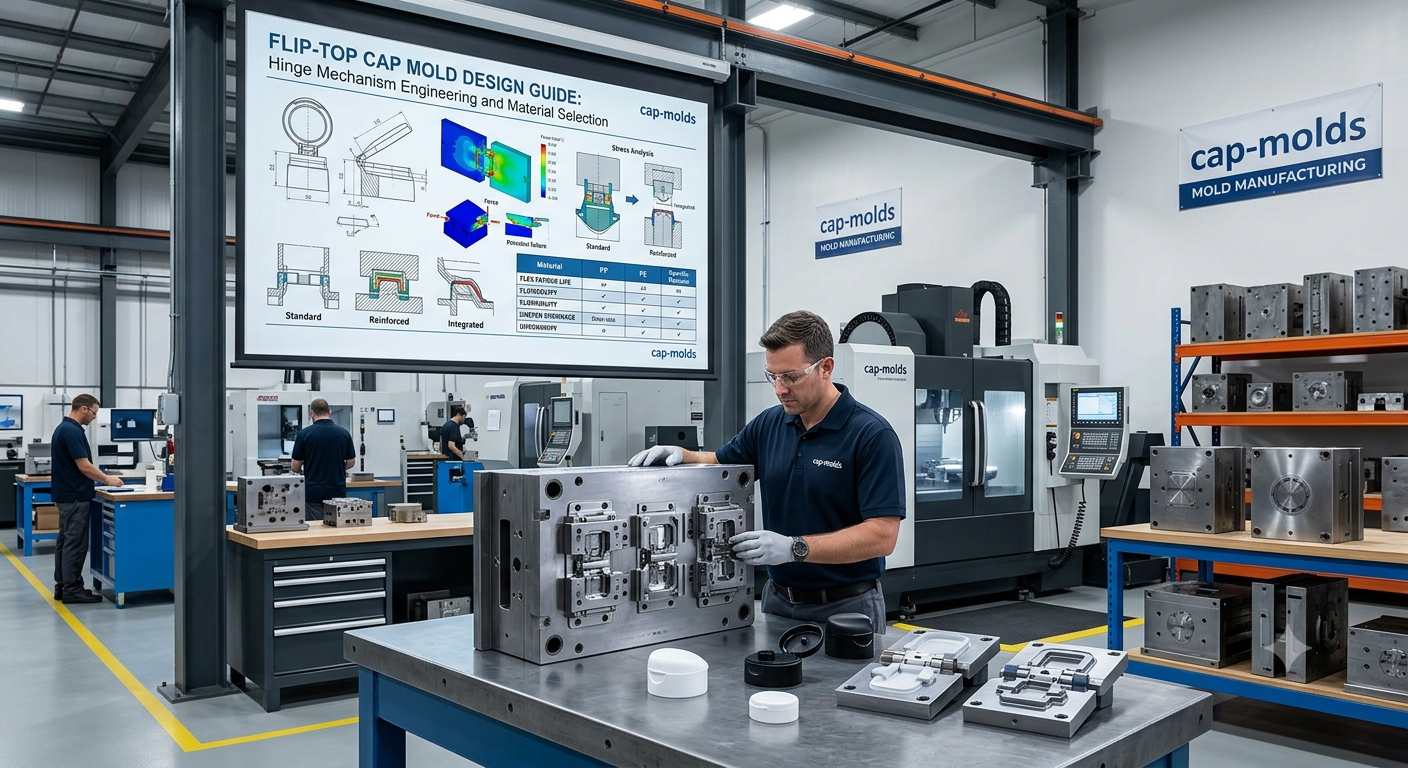
Flip-Top Cap Mold Design Guide: Hinge Mechanism Engineering and Material Selection
In the global packaging and consumer goods sector, flip-top closures are ubiquitous. From personal care shampoos to food condiments and pharmaceutical bottles, the convenience of a one-handed opening mechanism makes flip-top caps a preferred choice for brand owners worldwide. However, manufacturing these closures reliably at high speeds is a formidable engineering challenge. The intricate geometry of the living hinge, the precise snap-fit undercuts, and the demand for millions of flawless cycles require absolute mastery over mold architecture.
As a leading Chinese engineering and manufacturing expert in specialized closure tooling, .cap-molds delivers advanced, turnkey mold solutions optimized for performance and durability. In this technical whitepaper, our engineering team explores the critical design principles, mechanical kinematics, and metallurgical selections required to engineer world-class flip-top cap molds.
1. The Anatomy of a Flip-Top Closure: Mechanics of the Living Hinge
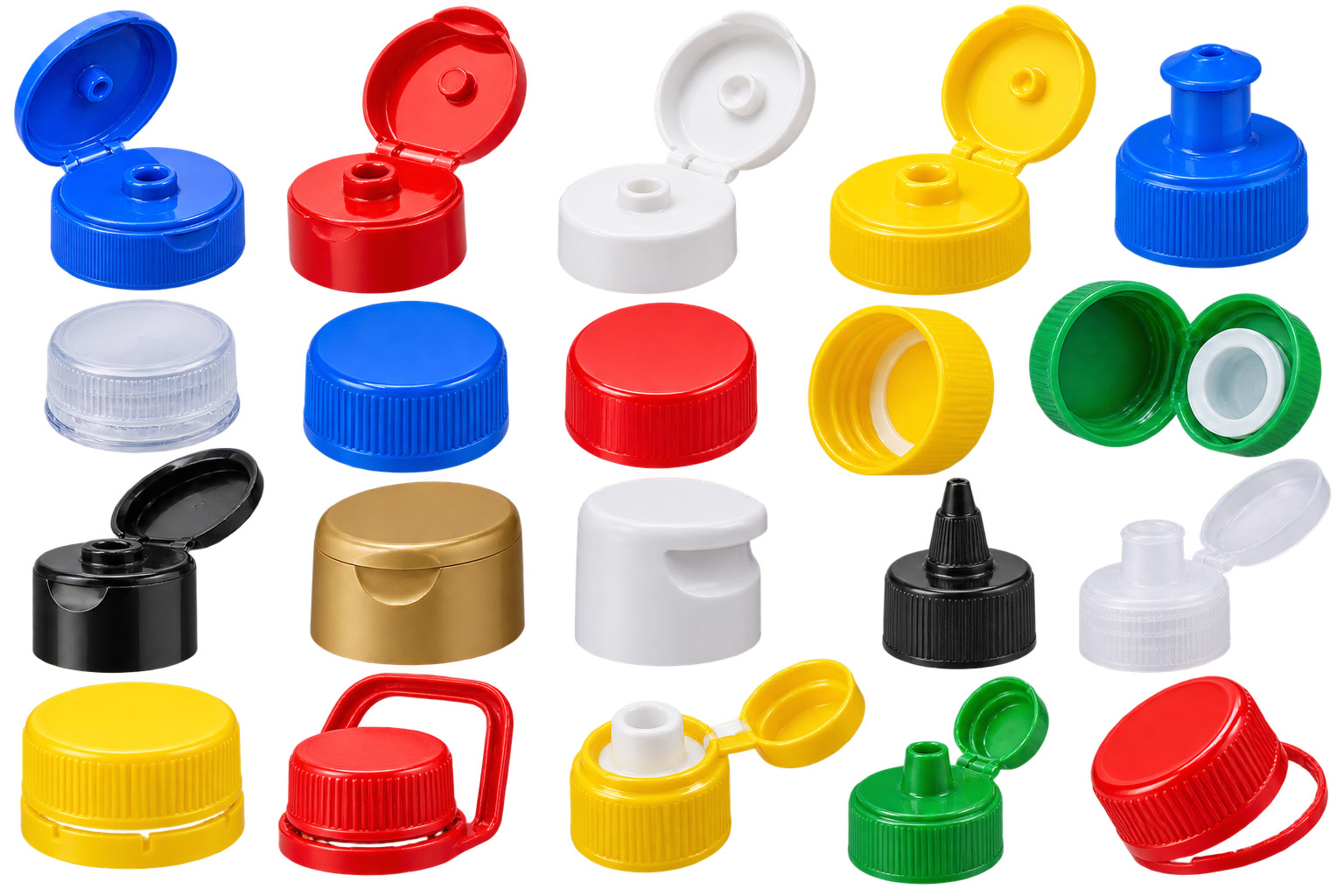
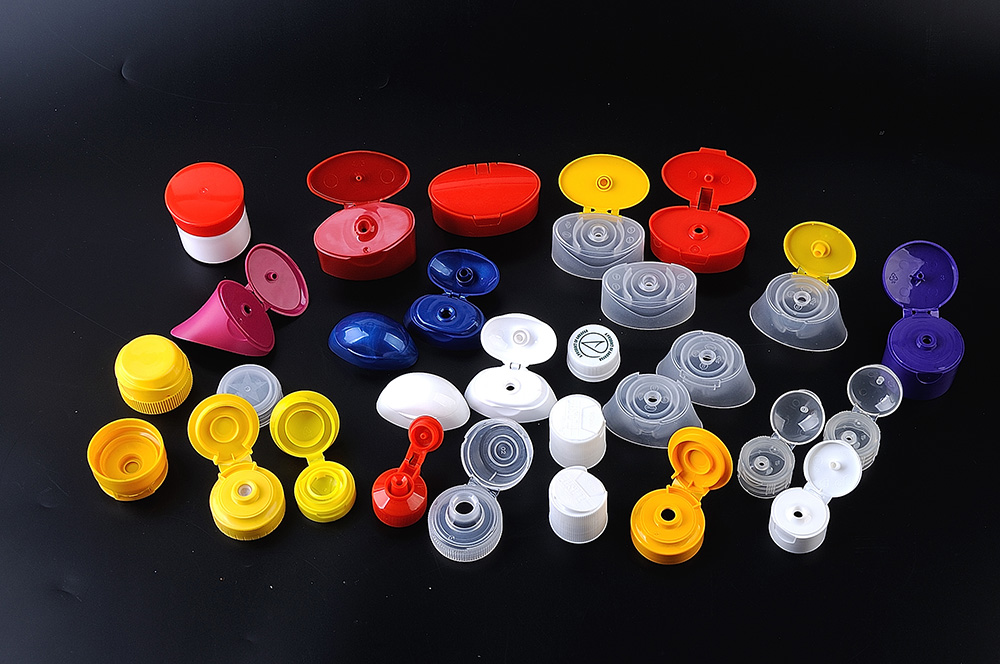
The core distinguishing feature of any flip-top cap is the living hinge—a thin, flexible web of polymer that connects the cap lid to the base body. Designing this component requires precise calculation of molecular orientation and stress distribution:
- Flow Orientation: During injection, polymer chains must flow perpendicular to the hinge axis to maximize tensile strength and tear resistance during repeated bending.
- Thickness Calibration: The hinge cross-section must be carefully optimized (typically ranging from 0.3mm to 0.5mm depending on the resin). An overly thick hinge leads to high opening resistance and stress whitening, while an overly thin hinge risks premature fatigue failure.
- Snap-Fit Interlock Design: The latch geometry must provide a satisfying, audible "snap" while maintaining a consistent opening force (pull-off force) across multi-million cycle runs.
2. Advanced Mold Architecture and Core-Pull Mechanisms
Unlike standard screw caps, flip-top caps require complex mold actions to accommodate side undercuts, snap rings, and hinge orientations.
A. Precision Slider and Collapsible Core Assemblies
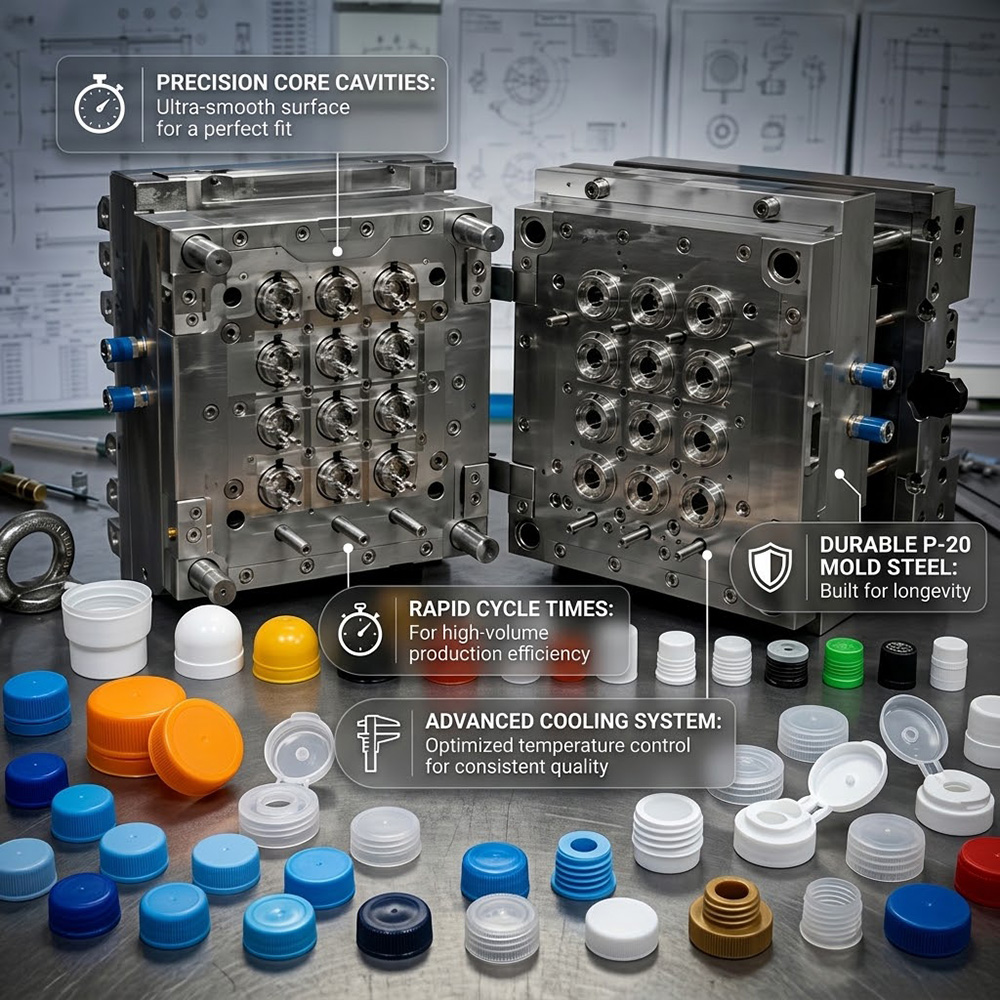
To release the internal undercuts and the snap-fit features of the cap body without damaging the plastic during ejection, .cap-molds utilizes precision-machined internal slider blocks and cam-actuated mechanisms driven by high-durability components.
B. Hot Runner Integration for Balanced Flow
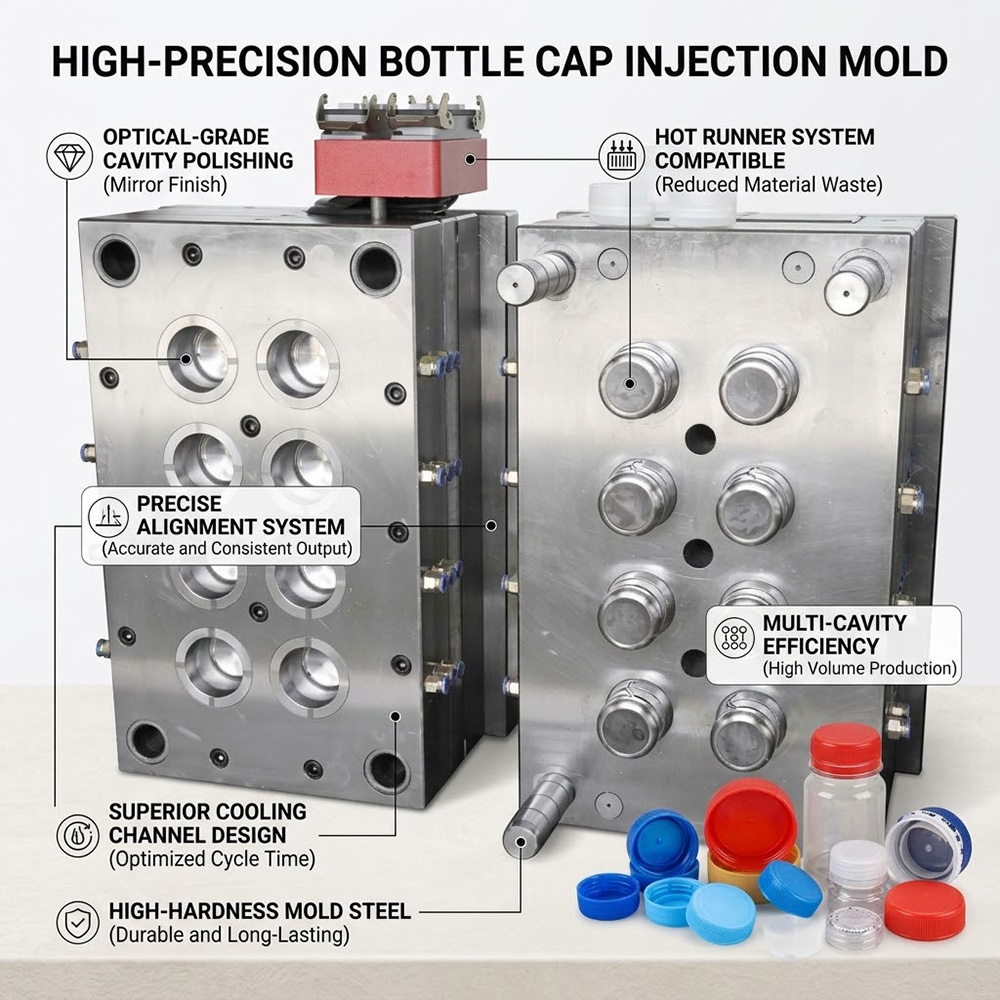
In high-cavity flip-top mold configurations, uneven melt distribution can cause localized over-packing near the gate and short shots near the thin hinge edges. We integrate custom-engineered, naturally balanced hot runner manifolds equipped with independent thermocouple zones to maintain uniform melt viscosity across every cavity.
3. Metallurgical Selection: Why Material Quality Dictates Tool Lifespan
High-speed cap production subjects tooling to extreme clamping forces, high injection pressures, and abrasive polymer friction. Selecting subpar mold steel results in parting-line wear, flash, and catastrophic tool failure.
- Premium Swedish S136 Stainless Steel: All core and cavity inserts manufactured by .cap-molds utilize high-purity S136 stainless steel (vacuum-hardened to HRC 48–52). This provides exceptional corrosion resistance against damp cooling water and superior wear resistance over millions of cycles.
- Beryllium Copper (BeCu) Thermal Inserts: To eliminate hot spots and accelerate heat dissipation around thick hinge anchor zones and snap-fit ledges, we embed high-conductivity BeCu inserts, stabilizing volumetric shrinkage and driving down cycle times.
4. Technical Specifications: Flip-Top Cap Mold Parameters
| Design Parameter | Engineering Specification |
|---|---|
| Standard Cavitation Range | 16 to 48 Cavities (Customizable up to 64) |
| Core & Cavity Material | Swedish S136 Stainless Steel (HRC 48–52) |
| Hinge Fatigue Life | Guaranteed for over 1,000,000+ flex cycles |
| Machining Tolerances | ±0.005mm (Executed on Makino & Yasda CNC centers) |
| Cooling Efficiency | Integrated 3D conformal cooling and BeCu thermal inserts |
Partner with .cap-molds for Expert Closure Solutions
Designing a high-performance flip-top cap mold demands a seamless blend of mechanical engineering precision, advanced thermal management, and elite manufacturing capabilities. As a premier Chinese cap mold manufacturer, .cap-molds combines decades of closure expertise with world-class CNC infrastructure to deliver molds that guarantee high OEE and zero-defect production.
Ready to bring your innovative closure design to market with absolute confidence? Contact the engineering experts at .cap-molds today to request a comprehensive DFM analysis and technical proposal.
Keywords: flip-top cap mold, living hinge mold design, bottle cap mold, .cap-molds, China cap mold manufacturer, closure tooling expert, injection molding cap, S136 mold steel, high cavitation mold, hot runner cap mold, snap fit cap tooling, plastic closure design, precision mold engineering, multi cavity cap mold