48-Cavity vs 64-Cavity vs 96-Cavity Cap Molds: Capacity, Cost, and ROI Comparison for 2026
48-Cavity vs 64-Cavity vs 96-Cavity Cap Molds: Capacity, Cost, and ROI Comparison for 2026
Published by cap-molds — Premium High-Cavitation Closure Tooling Engineering
Executive Summary & Industrial Context
In high-speed beverage and pharmaceutical closure production, choosing the optimal mold cavitation level is one of the most critical financial and operational decisions for packaging converters. As global demand for lightweight closures, tethered caps, and post-consumer recycled (PCR) resin processing grows, manufacturing plants must maximize hourly production yield while minimizing total cost of ownership (TCO).
While moving from a 48-cavity tool to a 64-cavity or 96-cavity platform significantly increases annual output, it also demands higher injection molding machine tonnage, advanced hot runner thermal balance, and ultra-precise cooling infrastructure. As a premier China closure tooling specialist, cap-molds provides this technical and financial comparison across 48-cavity, 64-cavity, and 96-cavity cap molds to assist global plant directors in maximizing return on investment (ROI).
1. Production Capacity and Annual Throughput Analysis
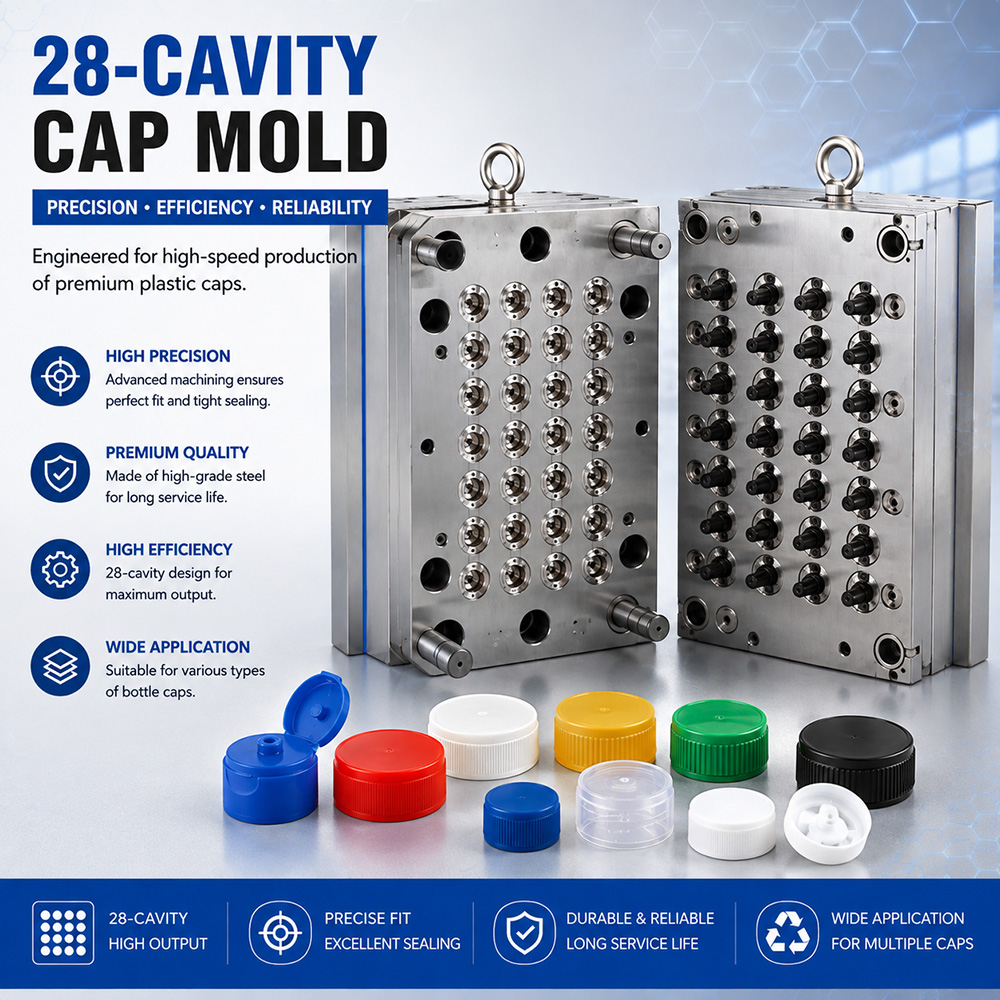
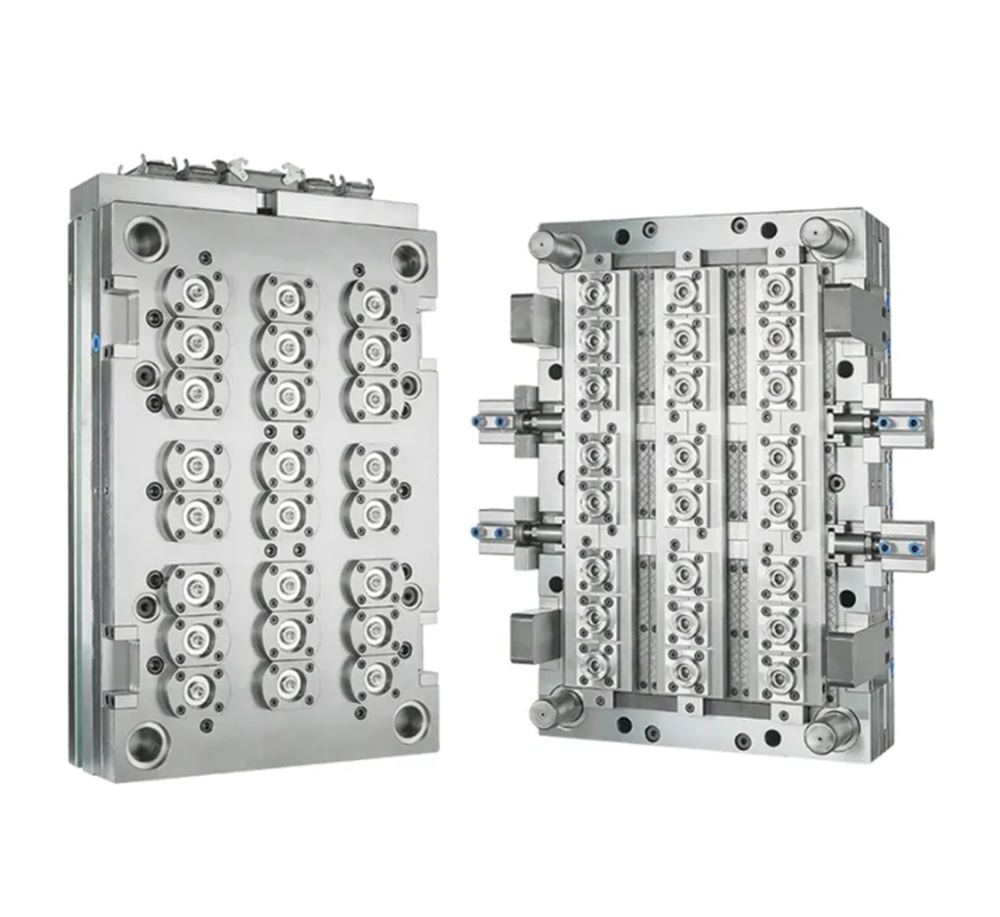
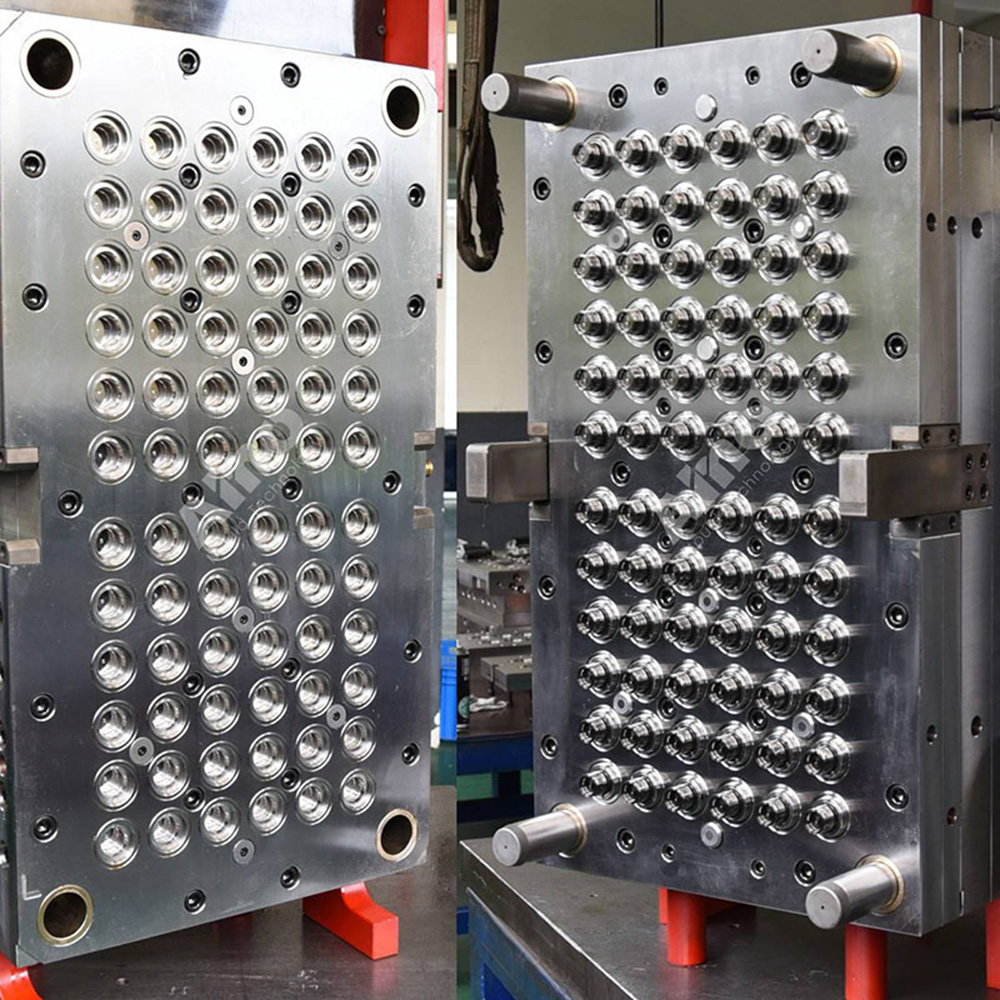
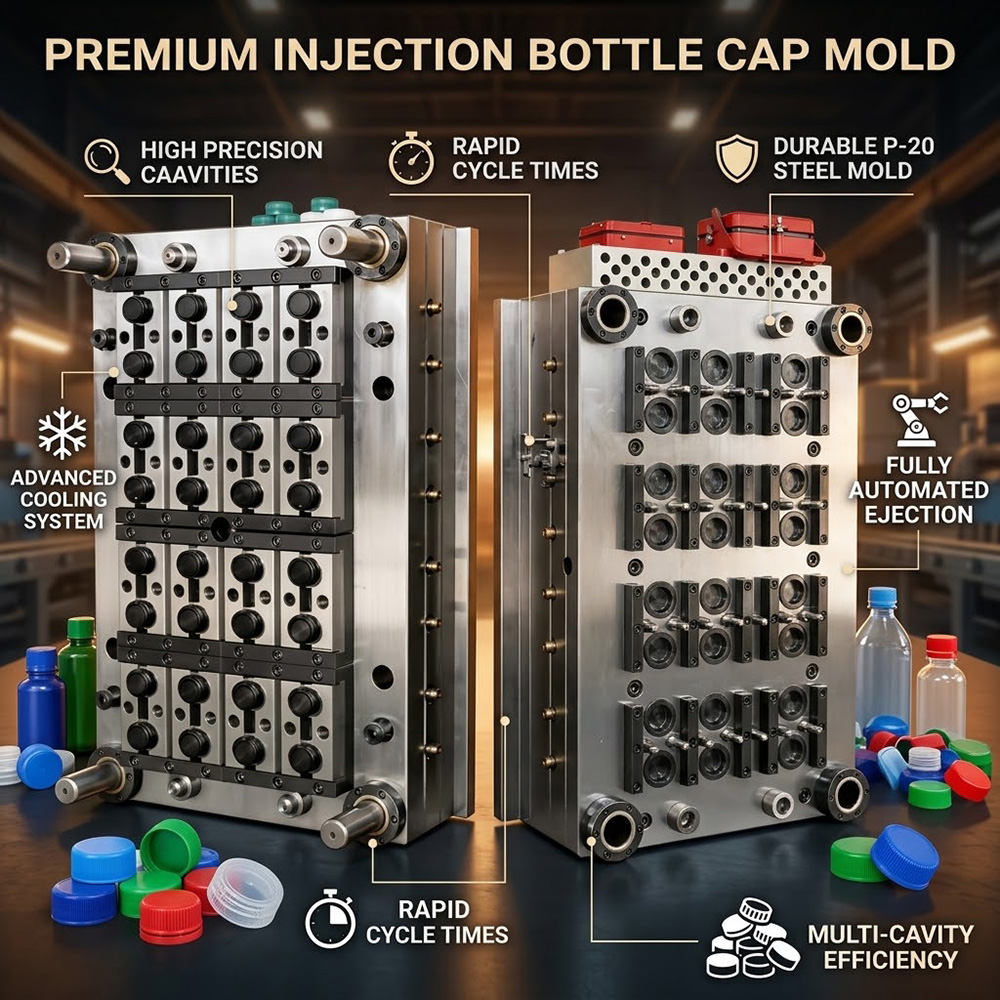
Production capacity is governed by cycle time, mold cavitation, and operational efficiency (OEE). High-cavitation tooling engineered by cap-molds incorporates 3D conformal cooling inserts and valve-gated hot runner manifolds to maintain sub-3.8-second cycle times across all mold sizes.
Annual Output Estimates (Based on 8,000 Operating Hours/Year at 95% OEE):
- 48-Cavity Cap Mold (3.8s Cycle): ~345 million caps/year. Ideal for regional bottling lines and medium-volume specialized closure runs.
- 64-Cavity Cap Mold (3.8s Cycle): ~460 million caps/year. The benchmark configuration balancing high volume with operational flexibility.
- 96-Cavity Cap Mold (3.6s Cycle): ~727 million caps/year. Designed for mega-tier CSD (Carbonated Soft Drink) and bottled water production facilities.
2. Comprehensive Capital Expenditure (CapEx) & Technical Requirements
Scaling up cavitation requires looking beyond the initial mold cost. Plant managers must evaluate machine clamp force requirements, auxiliary cooling capacity, resin delivery systems, and floor footprint.
| Engineering & Cost Metrics | 48-Cavity Tooling Platform | 64-Cavity Tooling Platform | 96-Cavity Tooling Platform |
|---|---|---|---|
| Required Clamp Tonnage | 280 – 350 Tons | 400 – 450 Tons | 550 – 650 Tons |
| Hot Runner System Type | 48-Drop Balanced Valve Gate | 64-Drop Balanced Valve Gate | 96-Drop Multi-Level Thermal Balance |
| Cooling Water Demand | 120 L/min (2.0 bar) | 160 L/min (2.5 bar) | 240 L/min (3.0 bar) |
| Relative Tooling Investment | Baseline (1.0x) | 1.35x – 1.45x | 1.85x – 2.10x |
| Floor Space Utilization Efficiency | Moderate | High | Maximum Output per m² |
3. Unit Cost Structure and Energy Efficiency
Manufacturing economy of scale drops fixed unit costs significantly as cavitation increases. By spreading machine depreciation, labor, and plant overhead across a larger output volume, higher cavitation tools lower the production cost per 1,000 caps.
- Labor & Overhead Amortization: A 96-cavity cell produces more than double the volume of a 48-cavity cell with identical operator headcount and floor footprint allocation.
- Specific Energy Consumption (kWh/kg): Modern hybrid and full-electric injection molding machines paired with cap-molds balanced multi-cavity tools reduce specific energy consumption by up to 14% per kilogram of processed resin.
- Maintenance Considerations: Higher cavitation tools require strict preventative maintenance schedules. cap-molds utilizes interchangeable core/cavity stack inserts (S136 steel, HRC 52–56) to enable rapid single-cavity maintenance without long line shutdowns.
4. Payback Period and Financial ROI Comparison
For high-volume closure manufacturers producing over 500 million units annually, upgrading from a 48-cavity to a 64-cavity or 96-cavity mold yields significant financial advantages:
- 48-Cavity ROI Profile: Lowest initial capital outlay; amortizes rapidly on medium-scale contracts (12 to 18 months payback).
- 64-Cavity ROI Profile: Optimal balance of CapEx and capacity. Offers the lowest risk profile for plants scaling up production (8 to 12 months payback).
- 96-Cavity ROI Profile: Highest initial CapEx requirement, but delivers the lowest unit production cost. On continuous high-volume contracts, the higher investment is fully recovered within 6 to 9 months.
Partner with cap-molds: Precision Closure Engineering Specialists
Selecting the right mold cavitation strategy depends on your annual volume demands, machine availability, and market expansion goals. At cap-molds, we engineer high-precision 48, 64, and 96-cavity cap molds equipped with advanced thermal balancing, interchangeability, and long tooling lifecycles to ensure maximum operational uptime.